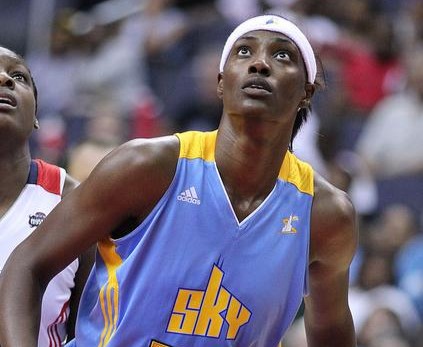

WOODBURY – Sitting down after a long tiring day of work or school, kick back, relax, turn your TV on with a click of a remote. In some cases, the picture that pops up on the TV, more often than not, is a display of sports.
Basketball is statistically the second most popular sport in the U.S, from highly followed players like Lebron James, or Steph Curry, as well as Paige Bueckers and Catlin Clark. Women’s basketball, specifically, has seen an increase in its viewers over these past couple years.
According to the WNBA league website in 2024 the league reached its highest attendance in 22 years. Although the league has shown higher viewer counts the pay gap has still remained extremely far apart; With the lowest WNBA player is paid $66,000 compared to the $1.1 million for the league minimum in the NBA.
In contrast, the maximum salary in the WNBA for 2025 was $249,244. In the NBA they have a pay tier called “Super max” where players can earn contracts totaling over $300 million and $70 million annually.
Although the sport attracts many fans, fame, and trophies, it has an overbearing difference in the sport that has fans and players outraged.
The paygap between the WNBA and the NBA, two of the big league basketball programs that lead the country in viewers, compete for equal pay grades.
The differences between the WNBA and the NBA are little when examining the sport itself. Yet, people get heated out of their seats with rage either agreeing or disagreeing with the claim of unfairness when it comes to compensation.

Sure, there are some stylistic differences: Ball size, different 3- point line length, game duration, and lastly– gender.
Women in the WNBA are getting paid less than the men in the NBA, but why is that?
The reality is, no one really has a solid answer. The claim that women get paid less is true, yet no one’s gotten a single constructed answer from the leagues as to why.
Much speculation has been brewing over these past couple years, with critics noting the WNBA has less of an audience or, as some critics have said, NBA players are better to watch or the simple misogyny of the increasing trend in the U.S of men getting paid more than women.
Toby Denman, former girls basketball assistant coach, and science teacher at Nonnewaug High School shares his view on why the WNBA has a lower pay grade.
“I believe the NBA as a whole generates far more revenue than the WNBA does,” says Denman, noting that while the revenue of women’s basketball has increased dramatically, the sport is still playing catch-up. “So it makes sense that NBA players make more money than WNBA players do.”
So yes, many opinions of whether the pay should be equal or different can spark many remarks with reasons why it would make sense for the pay difference, but what do the players of the future think? Do they think that hard work and constant persistence as well as their entire career should be thrown away just because people said so?
Olivia Penrosa, a girls basketball player for Nonnewaug High School disagrees.
“I think it is super unfair because the girls are bringing the same talent,” says Penrosa. “The stands for women’s games are also plenty full but the players just aren’t earning the money they should because it goes to the men. The girls just don’t dunk.”
While the women are putting in the effort, their hard work and years of building up to play professional basketball are diminished and are categorized as just not bringing enough talent.
This extreme pay-gap is ruining the women’s league day by day as most recently the current feud between the WNBA players union and owners has led to a standstill. People have their own opinions but no one thinks about the players who have poured their whole life into this sport.
“I think that it’s unfair because they’re both putting the same amount of work and the same amount of effort in time into a sport,” says Linneah Brennan, a freshman girls basketball player at NHS. “Just because they’re different levels it doesn’t mean that women should get paid less.”
Alexa Philippou, a journalist who writes exclusively about the pay gap between the NBA and WNBA, wrote an article on how the pay might be negotiated.
ESPN’s article states “the WNBA and Women’s National Basketball Players Association remain at an impasse as they work toward a new collective bargaining agreement.”
At the date of publication, the pay for women basketball players is being discussed as a potential increase, while to many it may seem unnecessary; the players within the league will finally get what they deserve and see their hard work pay off.
Amid an era of exponential earning power for athletes, it begs the question: will female athletes ever get the pay they deserve.