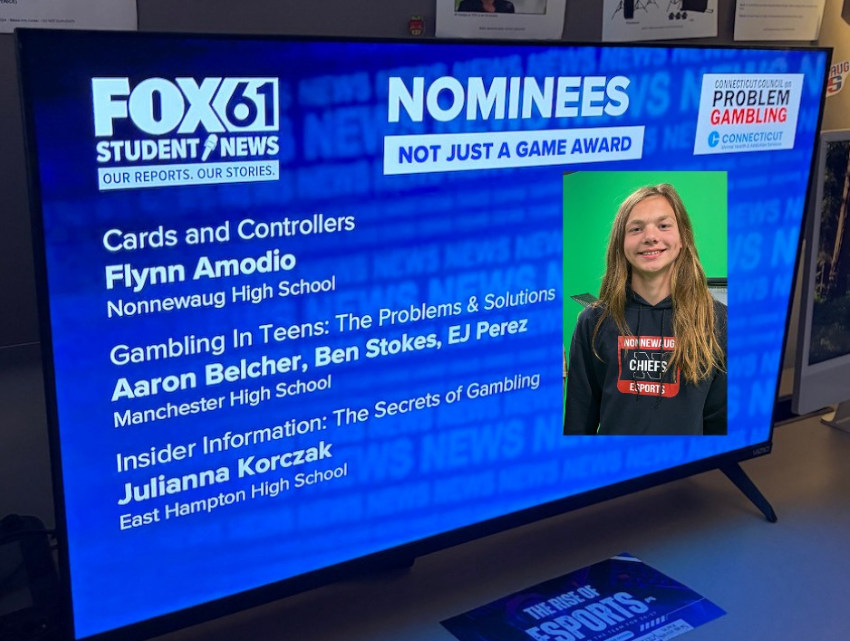

WOODBURY – Nonnewaug high school student, Flynn Amodio has recently found himself in the spotlight. After his work exploring the connection between gaming and gambling. Flynn’s story stood out from the rest because he approached the topic of problem gambling in a unique way that relates to the interests of many teenagers today with video games.
Katie Blake, NHS’ computer science teacher, video production instructor, and E-sports coach at Nonnewaug, worked with Amodio on his story.
“Gambling can sometimes be difficult for teenagers to explore,” Blake said. “Traditional discussions often focus on casinos, sports betting, or adults seeking help through gambling hotlines. However, Flynn looked at the issue from a different perspective by examining how gambling-like systems appear in modern video games. His project focused on loot boxes and microtransactions, features in many games where players spend money for a chance to receive rare items or rewards.”
He discovered that these systems can create a similar feeling to gambling. Much like someone playing slot machines or card games at a casino, players may experience excitement and anticipation when opening a loot box, hoping for a valuable prize. This comparison helped show how gaming mechanics can sometimes mirror the psychological effects of gambling.
Cassidy Weeks, a junior at Nonnewaug High School and a member of the Esports team was a part of Flynn’s project, too.
“His work also led to broader conversations in class about how gambling has become more visible in everyday life, especially in sports.” Weeks said. “For example, when watching an NFL football game, viewers often see multiple commercials encouraging people to place bets. These advertisements appear more frequently than ever before.”
For Amodio, this project, and the award he received in late February, is especially important to him.
“My project has inspired others because it offered a fresh perspective on an important issue,” Amodio says. “I was able to do this by connecting gaming and gambling, he helped people better understand how these influences may affect younger audiences in today’s digital world.”