
WOODBURY – If you live in or near Bethlehem and Woodbury, it’s likely that Nonnewaug High School’s 2020 renovation reached your ears. In early 2018 the 63.8 million dollar renovation began and by the summer of 2020 it was completed, new and improved with brand new science labs, a new auditorium, new turf fields and a rebuilt gym.
However, even after the makeover, there was one thing still missing.
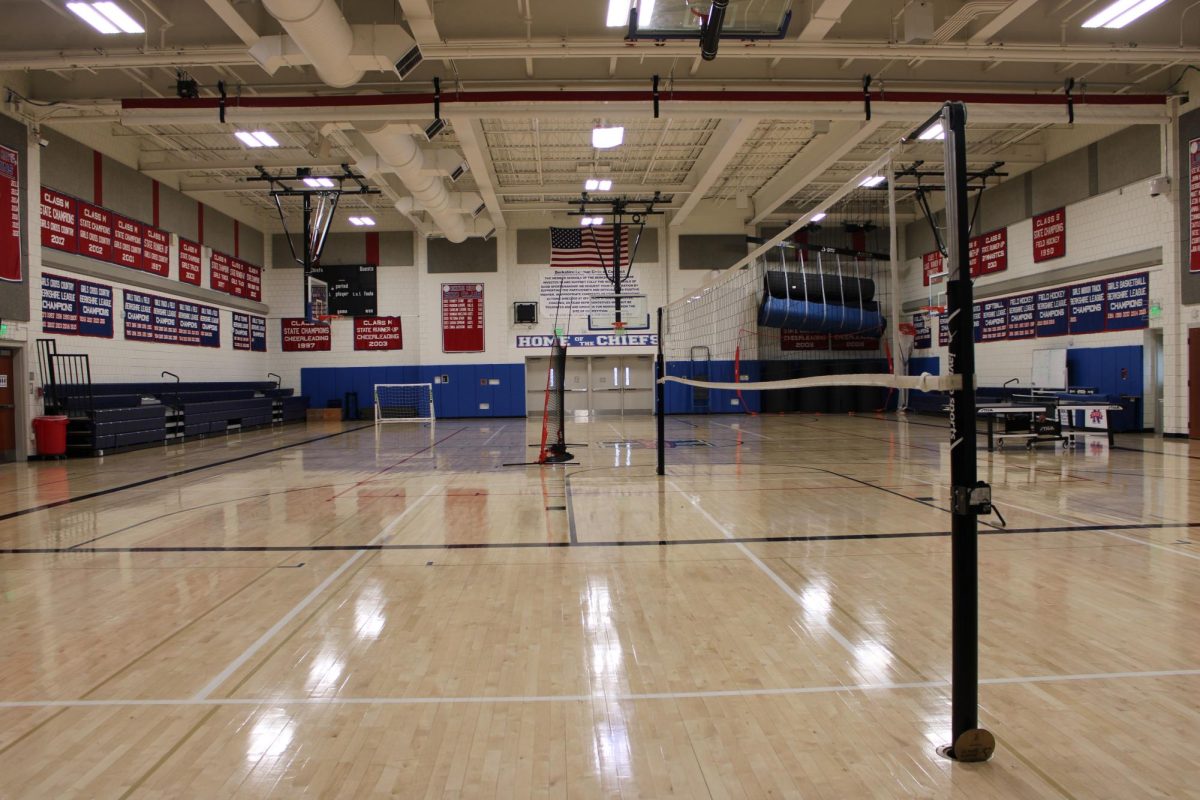
There are many sports teams at NHS and only one gym in the school. This causes complications with the space.
During fall, there’s volleyball in the gym. In the spring there’s unified volleyball, and during a rainy day, there may be baseball and softball. In the winter, both boys and girls basketball must share the gym- not to mention also having the wrestling, unified basketball and cheer teams that need somewhere to go.
Too many things and too little space.
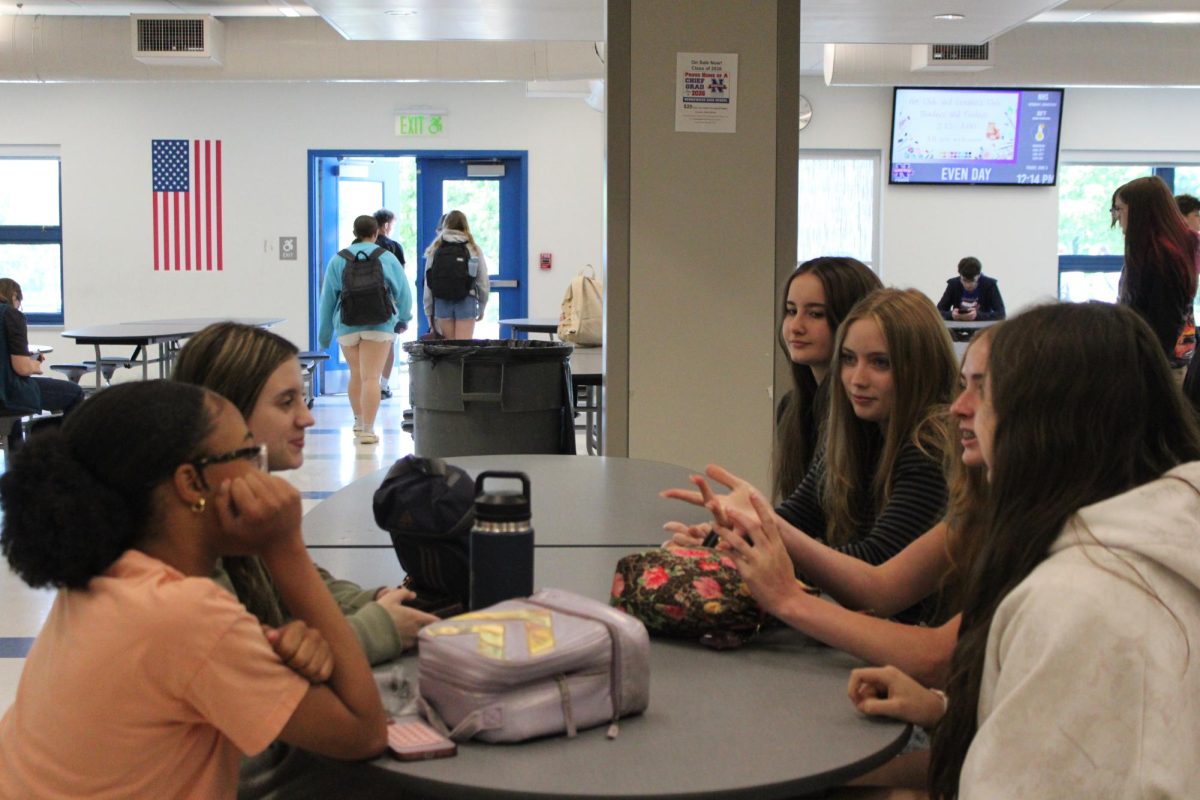
NHS has tried to make some solutions for this–especially during the winter when the issue of space rears its head the most. The wrestling team practices in the cafeteria, and this year the cheer team is forced to move to Woodbury Middle School for their practices. However, these solutions are far from perfect.
There is a way to fix this problem, though: What if Nonnewaug had an auxiliary gym?
An auxiliary gym would be an additional space for NHS’ many sports teams, activities and events. Having another gym would guarantee space for everyone and would create many advantages. Just a few are injury prevention, having more options on exercises and drills, and, of course, spending more time at practice…actually practicing.
Declan Curtin, Nonnewaug vice principal, understands the advantages of having an auxiliary gym.
“I think it would be helpful to have,” Curtin noted. “I looked over at Lakeview who has two (gyms) in their own building, and in terms of scheduling, it is much easier. In terms of equity, all teams get access to the facility which is great. Here we have teams going to 9-9:30 at night.”
As Curtin notes, many other schools have auxiliary gyms. In Connecticut alone, John F. Kennedy High School, Lakeview, RHAM High School, Wilton High School, Stamford High School and, even former Berkshire League brethren Lewis Mills, all have one.
Not having this same privilege causes problems at NHS as many groups struggle with not having their own space.
Before the renovations, there was a mat room where the wrestling team would practice, but this was removed to make a weight room.
Losing this area and transferring into the cafeteria was a big change for the wrestling team. It also introduced some new problems.
Dave Green, NHS wrestling coach, has observed some of the struggles with not having his own space.
“Practicing in the cafeteria definitely makes it harder,” Green said. “Our last auxiliary gym (the mat room) before they did the renovations was completely matted, not only floors but walls, too. This made it safer and you could do more things in the space. In the cafeteria you can’t do certain things because of safety issues.”
Without having the safety of the all around matting, what the team can do during practice decreases dramatically. This makes the practicing they do more limited, and can possibly impact how the team performs.
Safety issues cause problems in what sports teams can and cannot do during practice. It eats away at the versatility of the conditioning and drills. However, this is only one of the big issues that not having space causes.
Curtin understands some of the other disadvantages of NHS’ lack of space.
“Some of our teams go later at night with the practices,” Curtin notes. “It’s unfortunate for out of town students who have to go home and then come back here. That’s the difficulty of all of it.”
As Curtin explains, having to travel or find space to practice can cause much later nights for athletes. An example of this is the cheer team who is going to the middle school for their practices. They won’t have as much time to go home, eat dinner and get their homework done, not to mention how it impacts being able to get the required amount of sleep-something that is very important in teen health.
The NHS sports teams weren’t the only ones affected by these changes and problems. Many other groups like gym classes, clubs, committees and more have to face the issue.
Green sees first-hand how losing the mat room impacts students–this time addressing groups outside of his own team.
“For a P.E. class, if there were two or three gym classes at one time, it gave opportunities for the students which they don’t have now,” Green stated. “It was a hard transition for me definitely, but I think it was harder for the athletes and the students that had the space.…and then no longer had it.”
An auxiliary gym would do all of this and more, benefiting the students and school as a whole. It would give students more opportunities for physical education, expanding sports, extracurriculars and more.
“I think that having an auxiliary gym is effective for not only P.E. but also athletics,” Green said. “It gives us extra space. Even when we’re doing things like blood drives, or club fairs– anything it gives us extra space for.”
With all of these impactful advantages why exactly aren’t we putting another gym up as we speak? Though the idea of having one is very enticing, it’s harder said than done.
Curtin explains what’s preventing Nonnewaug from having another gym.
“Physically, I don’t see the space at Nonnewaug to do it, and of course the cost would be extreme,” Curtin said. “The need for the extra space is certainly there, but I can understand why we can’t do it because of the cost and the physical layout of the building.”
Both of these issues are relevant –but what’s stopping NHS from finding a solution?
For a $63 million dollar renovation, Nonnewaug High School needed to take another look at what really mattered. Having another gym would be an investment in our students and athletes, ensuring sure there is room for everyone. We need to stop pretending that having an auxiliary gym is impossible, because it most certainly isn’t. There are many solutions to the given problems and for the amount of assistance it would do, the problem solving is only a small task.
Now I ask the question: Do we want to stand up and take charge of the solutions at hand, or let our winter athletes struggle through another season without a home?