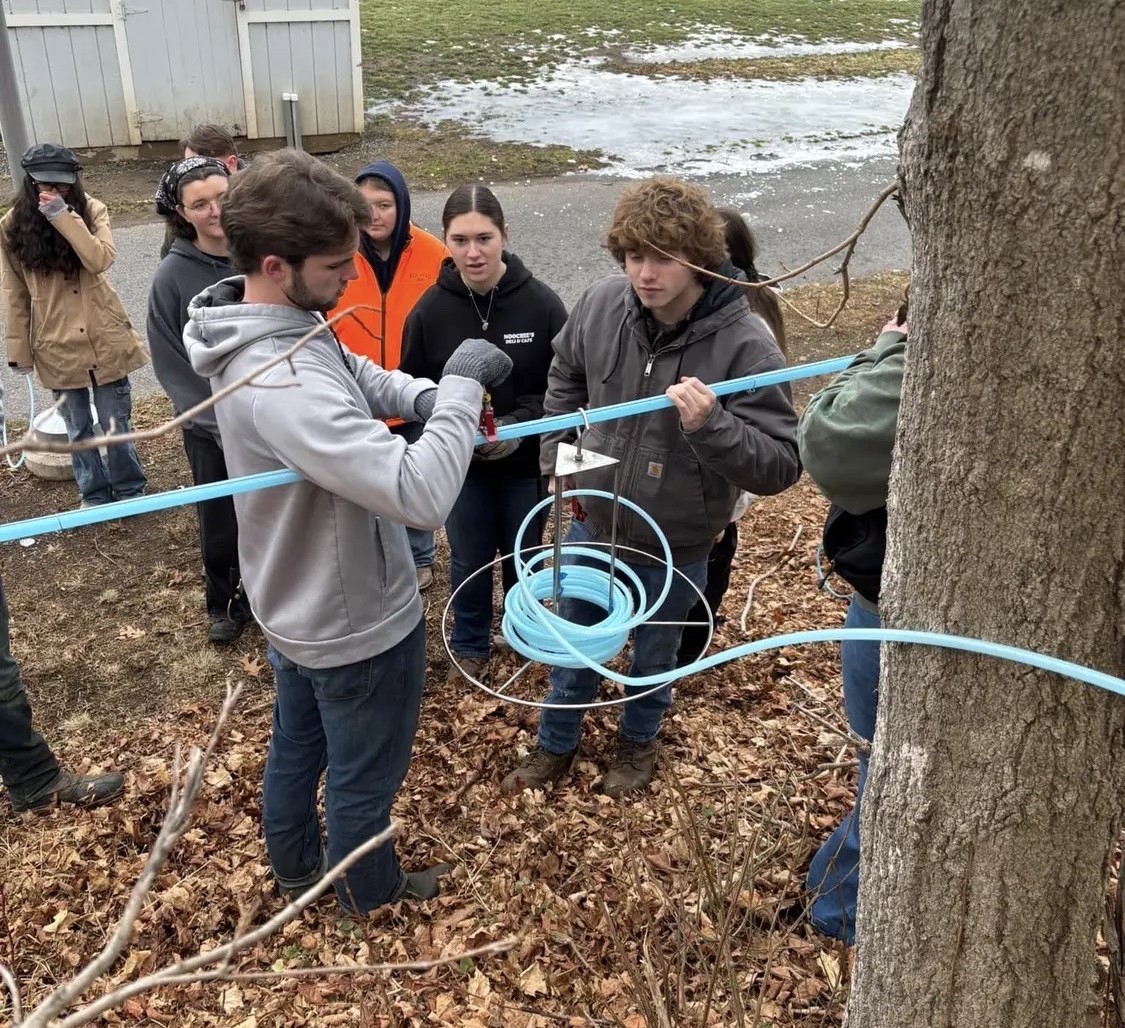

WOODBURY – Connecticut’s winter storms have had a definite impact on most outdoor activities, but not for Nonnewaug High schools Natural Resource students, who can be seen trudging through the snow at 7:25 in the morning checking sap lines around campus.
As temperatures begin to fluctuate between freezing nights and warmer days, maple trees around the east coast begin to produce sap, which is the key ingredient for making maple syrup. No matter the weather, students are obligated to go outside every morning to tap trees, check lines, and collect sap to be boiled in the sugar shack. But this winter’s heavy snow fall has made it difficult for the classes to even locate their lines.
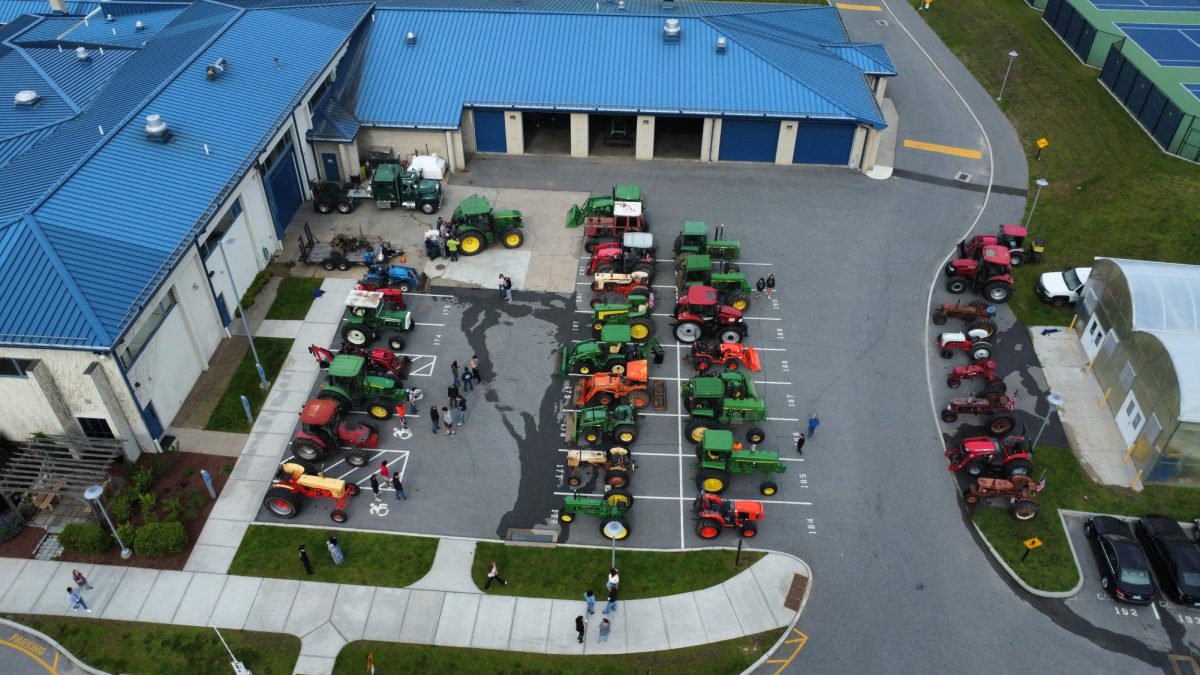
Luckily, students are able to use some of the equipment available to them at Nonnewaug to make the job easier. One of which being a John Deere tractor. It most definitely makes collection go more smoothly than working by hand, but with all the recent snow even tractors can have a hard time getting through it.
Nathan Berry, a senior in one of the natural resources classes has experienced this first hand.
“The snow hasn’t been too much of a problem with collecting, but it definitely does become a nuisance.” Berry said. “We use the old John Deere to collect, and while that doesn’t have much of a problem with the snow, there is no bucket on it to plow the snow out of the way.”
Though the snow definitely can make parts of the sugaring process more difficult, natural resources teacher Lee Whalen believes it is more beneficial than students realize.
“The snowpack helps maple sugars by keeping the ground frozen longer and maintaining the cold temperatures needed for sap to flow in sugar maple trees,” said Whalen. “Maple sap runs best when nights are below freezing and days are above freezing, creating pressure changes inside the tree that push sap out. A good layer of snow acts as insulation, slowing the warming of the soil and helping these freeze–thaw cycles last longer.”
This year’s natural resources classes have actually seen a jump in sap production, which have led many to think it has something to do with the amount of snow we received this year.
“In all, we gathered and filtered approximately 650 gallons of sap and turned that into about 15 gallons of syrup,” Whalen. “[This year’s yield] is double what we collected and processed from last year.”
Syrup harvested this past winter is now for sale, with prices ranging from $10 for an 8 oz. bottle to $25 for one quart.